Showing posts with label Editorial. Show all posts

Monday, February 6, 2017

126.8

3:01am

My alarm goes off.  I went to bed at 6pm, so I’m pretty well rested. Grab my kit, head to the bathroom and suit up.  Plenty of chamois cream: this is going to be a long ride.  I go to the computer to do a last check on the weather.  Current temperature is 59 and clear skies, warming up to 71 by midday.  Perfect.

3:28am

I walk out the door with my bike.  The air is cool, but not cold.  I look up to see the stars in the sky and the enormity of the ride in front of me quickly flashes through my mind.  I repeat my mantra that’s carried me through many long and less than pleasant rides, “once it’s over, then it’s done.” Even the hardest ride in the worst conditions can be overcome if you have the mentality to realize that the suffering will end and just push through it.  Endurance sport is physical until you reach a certain level of fitness, and then it becomes 100% mental.

4:35am

I finish my first water bottle as I pull into the Sebastian River boat launch.  I stopped here pretty much every northbound ride I do and fill up a bottle because its the last water fountain that has cold water on my routes that I am aware of.  The first time I did a 200 kilometer ride, I finished in 7 hours and 2 minutes, and I was suffering by the end.  My theory was that I was dehydrated and that if I consciously drank more than I felt I needed by the end I wouldn’t get any sort of water bonk.  

Often times in cooler weather we tend to drink less than we should because we don’t feel hot, or feeling hot from being under-hydrated actually feels comfortable because its cooler outside.  The problem, especially for me as a Floridian is when you start at a ride thats in the low 50’s but once the sun comes up it hits the high 70s.  This creates a situation where the powerful sun hits you right as your fatigue sets in and you were already a bit under-hydrated and you get slammed by dehydration.  As I filled my bottle up I thought to myself that whatever issues I run into, hydration won’t be one of them.

5:15am

Mile 27.  I am at the intersection of Micco Road and US1.  For those who don’t know, US1 is a fairly busy road.  At this hour not very busy, but still a bit unsafe since its still very dark and cars go very fast.  I eat my first cliff bar.  To go with the good hydration plan I fully intend on taking on enough carbs to avoid a bonk.  I travel on US1 for a mercifully short 10 minutes before I can hop on Old Dixie Highway which is a parallel road but very isolated and infrequently traveled by cars.  I do feel a nice sense of relief being off US1.

5:50am

Mile 36.  Back on US1.  Still dark, but at least getting to a well lit populated area.  I’ll be on US1 for a while now as I make my way through the Palm Bay, Melbourne, and Satellite Beach area.  Melbourne has a very sketchy section with no bike lane.  Normally not a problem since the sun is usually up as I ride through here, but today’s early start means no sun so I am extra careful.

Around mile 40 I eat cliff bar number two and finish bottle number two.  

6:50am


Mile 55.  The sun is rising.  Daylight!  I turn my bike lights off.  This is a major milestone mentally.  It means that, while the ride may not even be halfway, the part that creates the greatest anxiety (riding in the dark) is over.  As I enter the town of Rockledge, I turn off US1 and onto the exquisite Rockledge Drive.  Its a beautiful road that runs right up to the water.  It’s a mecca for the local cycling and running communities due to the scenery as well as low 25mph speed limit eliminating any sort of auto traffic.  I stop to snap a picture.  The early morning fog hasn’t burnt off yet so the sky isn’t blue, as a result this isn’t the prettiest picture possible, but you get the idea.

I think part of the charm of this road for me is how much nicer it is to ride on than US1, but also how interesting the houses are.  Unlike most edge-of-the-water mansions, these are old houses.  They are all at least 50 years or older, in the Southern Colonial style.  They are well maintained so while they have an old fashioned, warm feeling they still look expensive and are owned by extremely wealthy people.  It just all comes together to feel like a very cohesive and charming neighborhood.

This road ends in downtown Cocoa Beach at mile 62, about the halfway point of the journey.  I finish bottle number three as well as cliff bar number three and make my way over the sketchy as fuck Hubert Humphrey Causeway.  

7:30am

Mile 65.  I stop at the 7-11 on 520 and Tropical in Merritt Island.  I buy a giant bottle of water to fill up my bottles and a can of Coca Cola.  I’ve explained many times on this blog before about the amazing power of Coca Cola on long rides, but I’ll recap in brief:  Sugar and caffeine are (un)surprisingly helpful on long bike rides.  

As I walk out of the story I see an older dude about 65 examining my bike.  We chat for a bit while I fill up my bottles and drink my coke.  He was a cyclist himself and has completed RAGBRAI when he was younger.  Very cool.  He is pretty shocked when I tell him I am from Vero Beach and already biked 65 miles today and had another 60 to do to get home.  I encouraged him to get his bike out of the garage and go for an easy spin down Rockledge Road and see if he still enjoys it.  

I begin making my way south on Tropical Trail.  This is a very low traffic road in an extremely wealthy area.  Tons of cyclists and runners, and at times the island is narrow enough that you can see the ocean if you look left and the Indian River if you look right.  I think for a minute about what the flooding situation would be for these mansions when a hurricane hits.

8:50am

Mile 87.  Tropical trail is really long and nice for riding.  It is, however, protected from the wind due to lot’s of tree coverage so I don’t get a huge tailwind effect as I come south.  Tropical becomes Riverside Drive as you approach Melbourne and the road opens up a bit and the tail wind starts kicking in.  The whole ride I’ve kept my wattage around 175, which is a pace I could sustain indefinitely so long as I kept eating and drinking without a lot of fatigue.  Going north into the headwind that meant about 18 miles and hour.  Now that I’m going with a tailwind, it means 22mph, which feels like flying after the headwind crawl.


I stop at the 7-11 on A1A in Melbourne Beach for the final rest stop of the ride at mile 91.  I’m feeling quite strong and not at all fatigued.  I’ve drank 5 bottles of water so far and my hydration feels good.  The sun is now well up and the day is warming into the low 70’s.  Sky is intensely blue.  Absolutely perfect cycling weather.  Oh, I also have a tailwind that is picking up in speed.  Things are great.  At the 7-11 I purchase a bottle of water to fill up my bottles, a can of coke and my favorite on long rides: a bag of pretzels.  Especially after drinking the coke, I no longer really have the stomach to eat a sweet cliffbar.  But I do want carbs and salt.  Pretzels, if they are nothing else, are carbs and salt.  Having a handful of pretzels after drinking a can of coke when you’re on an epic bike ride is one of life’s great pleasures and to my non-endurance sport readers that probably sounds absurd.  To the ones who’ve run marathons or biked brevets, you are likely nodding your heads in agreement.

I keep half the bag of pretzels in my back jersey pocket in reserve for the last leg and make my way south A1A towards home.  The tail wind is nice and I’m still holding an easy 180 watts and going about 23mph.  

9:35am

Mile 101.  I am now about an hour from home.  I finish the rest of my pretzels and drink water bottle number 6.  My legs have no fatigue in them thanks to the easy 175 watt pace I’ve kept up.  As I said before, last time I did 200k I finished in 7:02.  My goal this time was to finish sub 7:00.  To do that, I needed to pick up the pace slightly this last hour.  Thanks to my hydration, nutrition, and pacing I was able to do so.  The last hour or so I averaged roughly 225 watts.  This was a significant upping of the pace and effort but I was ready for it and thanks to the tail wind I was flying at about 25mph.  

I passed the point just south of the Sebastian Inlet where I really cracked last time I did this and remarked mentally about how much stronger I felt at this same spot on the same route.  The hydration plan worked, that’s for sure.  

As I got back to the Vero Beach area I finished my last bottle, number 7.  I tackled the two bridge climbs (felt great pushing 350+ watts up them) and the crazy beachside traffic.  When the Garmin read 125 miles I was ecstatic because I hit the 200k mark and had lot’s left in my legs if I had needed it.  I pulled into my driveway at 10:45am.  My moving time was 6:49 for almost 127 miles.  A bit below 19mph but for a solo brevet that isn’t bad at all, and in all honestly I had enough left in my legs that I probably could have gone a tad harder and finish maybe 5 minutes faster, but all told I was happen to have beaten my previous go at this route by almost 15 minutes.  

Stats from the ride for those too lazy to click this link: https://www.strava.com/activities/854945759

Distance: 126.8 miles
Moving Time: 6:49:51
Normalized Power: 192 watts
Calories Burned: 5,111

All in all a very epic ride for me.  I said before the ride that to progress you have to do something outside your comfort zone, you have to scare yourself from time to time.  You have to start something without being 100% sure you can finish it.  While I had finished this route before, the first go at it wasn’t easy and as I said, I cracked with 20 miles to go and slogged my dehydrated body to the finish.  I thought I had a better plan this time, and I definitely did, but I was definitely scared of cracking again.  I’m stoked that I not only didn’t crack, but I kinda crushed it.  When I was finished, I was tired and hungry sure, but I wasn’t on ‘empty.’  I felt like I honestly could have gone another hour (or two) if I had to and could have made another Coca Cola and pretzel stop.  

I’m not sure what’s next.  David Goggins says that when we feel we are at our breaking point, pushing our limits, we are only actually at about 40% of what our bodies are capable of.  I don’t know that I want to confirm that theory by trying a 275 mile bike ride anytime soon, but my friend Westy jokingly asked me if I was going to do 200.

For the first time in my life, the idea of doing a 200 mile bike ride didn’t seem like an unrealistic joke: it sounded like an inevitability.

10:45am - The End

Sunday, January 29, 2017

2016 Musette Bag Year in Review

This was a great year for me personally.  Considering how much bad stuff happened worldwide I actually feel a little bad declaring that.  Keeping this dialed into fitness and nutrition topics lets discuss 2016.


Without geeking out too hard in stats, I did about 7,500 miles on the bike.  My year with the highest volume was 2012 where I did a bit over 11,000.  Oddly enough, I feel fitter than I was then by a mile and a lot less burned out at the same time.  11,000 came with some significant sacrifices: you can’t wake up at 4am four times per week to ride for 2 hours before a full day of work and ever go to dinner with friends or really have a social life at all.  While I am still definitely a bit of a hermit, in 2012 I was significantly moreso.  

Despite having a lot less volume than in 2012 I hit my highest levels of fitness ever by training a bit smarter.  This was the first full year I had a power meter on my bike.  Though I didn’t follow any specific training regimen, having the accountability of a power meter made a huge difference.  It simply forced me to work harder than I would have on each individual ride than I would have riding blind.  Working harder with less miles is going to get you better gains than easier longer rides, assuming you have a decent base fitness.

I managed to get a decent base fitness, despite riding 3 hours less on average during the week than I did in 2012 by riding longer rides on the weekends.  In 2012 I did only two rides of 100 miles distance.  In 2016 I did 13 rides of over 100 miles in length.  Again, I compensated for less total miles by making the miles I did higher quality.  So during the week I rode harder and faster than in 2012, and on the weekends I rode longer than 2012.  I rode my all time longest ride of 112 miles and then pushed past that the next month doing 126.  These 5 and 6 hours rides pushed my base endurance higher as my body adapted to doing them.  It allowed me to do my “short” 60 mile Saturday rides at a much higher speed.  Because if I can hold 200 watts for 5 hours, I can do more than that for 3.  The end result of training more efficiently thanks to a power meter is that I gained a lot more from a lot less training.  I can end 2016 saying in full honesty I’ve never been fitter.  The scary thought is, how fast could I be with a tailored, scientific race training plan?  If I dedicated my weekday rides to high intensity interval training?  Though I don’t plan to race competitively in the near future, and I certainly and not going to train high intensity intervals unless I need to train for races, its comforting to know that I haven’t hit the ceiling of my potential.


So cycling was great in 2016.  I rode the longest ride of my life and climbed the biggest mountains at the highest altitudes and took some sweet KOMs in the meanwhile.  Running, however, wasn’t what I had hoped.  I set the goal for myself in January to run a marathon in 2016.  Well, I didn’t.  Though I had new running shoes and was progressing well, I hit a bit of an obstacle: it gets super hot in Florida.  I know thats a shitty excuse, because lots of people train for and run marathons in Florida.  But the truth of the matter is I sweat a lot.  When I run, sweat pours off of me, even in cooler weather.  I ran a 10k run in weather that was low 70’s (cool by Florida standards) and couldn’t see by the end because the sweat was running down my face into my eyes, stinging me to blindness from the salt.  And that was wearing a halo headband.  This headband, designed to keep heavy sweaters from having sweat in their eyes was insufficient.  

The result was I had to reassess my goals and what it would take to pursue them.  Running, for me, was intolerable between the months of April and November.  If I planned to run a marathon by December you can see the problem this posed.  This was a big problem, but perhaps I could have surmounted it.  The bigger problem was that running was affecting my cycling in a negative way.  If I ran a fast 10k on Monday, my legs didn’t feel 100% even by Wednesday and the power I was able to produce on the bike was a lot less.  When I cut running out of my training, my average wattage on the bike went up by 5% because my legs were no longer constantly fatigued and battered.  So as much as I wanted to check the marathon box off my to-do list, it was asking too much.  So I was forced to admit defeat and back off of the goal.


Lastly, I want to touch on nutrition.  This was my first full year as a vegetarian and almost entirely plant based.  I reduced cheese to a minimum and reduced my egg consumption to about 5 for the whole year.  Its fair to ask if I was that close to being a “perfect” vegan why not cut out the 5 eggs and the hand of meals I ate with cheese in them throughout the year?  I don’t have a great answer.  I know that ethically cheese and eggs are morally wrong, and its probable that I will eventually give up both.  But for now, I say this as a total hypocrite, that it makes me life better to have a bit of cheese on something once every other month or to eat a cookie my mom baked that was made with eggs.  I understand that making my life better while causing cruelty to others is pretty fucking awful, but its a journey.  

So aside from my hypocrisy regarding some cheese and eggs, I’ve felt great nutritionally.  I eat a ton of fruit, especially blueberries and bananas, and my staple dinner 3 or 4 times per week is rice, beans, and tomatoes.  I don’t feel held back in any way, I’m able to do all the things I want athletically and I do not want for anything nutritionally and I don’t see anything that I am deprived or deficient in.  In 2017 I plan to continue down this path.  One thing I would genuinely like to eliminate is alcohol, though I hardly drink anyway.  I’ll probably do a separate blog about alcohol later though.


So all in all from a fitness and diet perspective a great year.  Solid training, epic rides, and lots of calories eaten.  I hope I can say the same thing for 2017 when it’s wrapped up.

Tuesday, August 2, 2016

This Just In: Exercise Makes You Fat

Today I wanted to blog about this video I recently saw linked on CNN.  As an aside you can pretty much assume any article you see on CNN about fitness, nutrition, or exercise is bullshit.  The legit good advice I’ve seen on CNN articles is miniscule compared to utter bullshit.  Full disclosure, I dont go to fox news’ or MSNBC’s website so their information might actually be worse.  

Anyway, the video:


Well this video is retarded.  There is a trend in American media whereby they realized that you get more clicks/views/ratings when you tell people that their bad behavior is actually good for them.  “WAIT YOU MEAN I CAN STOP EXERCISING AND EAT BACON AND LOSE WEIGHT?!”  Gullible morons will click a link to that story on all day.  A story titled, “Eat less saturated fat and cholesterol and eat more fruits and vegetables, also get off your fat ass and run,” isn’t going to get a lot of ad revenue.

This video is the same shit.  Except instead of being overtly sensationalist clickbait its sensationalist clickbait masquerading as scientific, which is in many ways worse since people might believe it.  

The main thesis of this trash is that you spend a ton of time working out and your appetite will expand to make you eat more so you aren’t losing any weight.  Seriously, thats their main argument.  You will be hungry after a workout and eat more.  Wow.

Well that was retarded.  What’s the alternative to working out?  Calorie restriction.  Oh boy.  You want to make the argument that it will be hard to control your appetite after a workout but it will be easy to control your appetite when you’re sedentary and on calorie restriction?  Does that make sense to anyone?  Ofcourse that isn’t the case in here in reality so it can’t possibly make sense.

If the only two options available are overeat and exercise or starve yourself and be sedentary, I’ll go with exercise and overeating.  Exercise, in addition to it’s ability to assist in weightloss, is FUCKING GOOD FOR YOUR.  It strengthens your bones, joints, muscles, and cardiovascular health.  Even if exercise was of absolutely no-consequence to weight loss, it would be worth doing.  That’s why making this video is so irresponsible.  

But, lets be fair: exercise IS a good weightloss tool.  There are many ways to skin a cat, you can do a weight training regimen, gaining lean muscle mass at the expense of fat while increasing your metabolism.  You can do heavy cardio, like cycling, and incinerate thousands of calories.  Or mix them together and get results.  

Ofcourse it is quite possible to still overeat despite a lot of exercise and not lose weight.  Diet and exercise are intrinsically linked.  Ofcourse if you burn 2,000 calories on your bike ride before lunch you’re going to be quite hungry at lunch, and as well you should be.  They key is to eat healthy food when you’re replenishing your calories.  If you eat healthy food that is conducive to a lean body composition, you can eat quite a lot of it.  If you bike for 2,000 calories and then eat a lunch of rice, lentils and brocoli amounting to about 2,000 calories you’ll be stuffed to the gills and it will promote a lean body composition.  If you finish your 2,000 calorie bike ride and eat Kentucky Fried Chicken or Pizza Hut deep dish pan pizza you’ll likely stay fat, and you’ll find it quite easy to exceed the 2,000 calories for lunch.  Shocking!  Healthy food combined with exercise will make you leaner.  

Calories in calories out.  Technically true but ofcourse what you weigh isn’t as important as what you’re made of.  Being heavy, according to BMI, because you have a lean, muscular build is vastly superior to being normal weight with low muscle.  Of Course the only way you’re gonna lose weight is, to eat fewer calories than you burn.  In the long run, this isn’t sustainable.  Heck, if the deficit you run is big enough, it isn’t sustainable in the short run either.  This video posits that its harder to sustain a calories deficit due to post-workout hunger.

Bull-fucking-shit.

Let’s assume your BMR is 2,000 calories per day, aka how many calories your body needs to sustain its current weight if youre sedentary.  What’s easier…

  1. Running a 400 calories daily deficit when you are sedentary and thus only eating 1600 calories daily or
  2. Running a 400 calorie deficit when you exercise and burn 1000 calories and thus get to eat 2600 calories daily?

I will tell you categorically that B is easier.  When you can eat 2600 calories your meals are bigger and more satisfying.  When you’re done eating you’ll feel full and recharged.  When you’re only eating 1600 calories per day your meals will leave you unsatisfied and you will likely go to bed hungry.  

From a lifestyle perspective option B is infinitely easier.  Work out like a demon, live an active life, eat as much as you want, be fit as fuck and better looking.  Option A, advocated by this video, is to starve yourself on the road to anorexia, live a boring sedentary life that you can’t enjoy, and die of a chronic disease.  There is simply no comparison.

Oh and once you’ve hit your goal weight?  Well for the crowd who exercises, once you stop running a deficit you get to eat huge, satisfying meals while maintaining your current weight.  For the Vox starvation crowd you get to eat 2,000 calories per day which you have to continue to count scrupulously because your room for error will be so small and continue living a low energy low fun lethargic lifestyle.  

Eat more, move more, live a better life.  Fuck Vox.

Monday, July 11, 2016

Naturally Skinny!

Barring serious medical issues, no one is “naturally skinny” or “naturally fat.”  I hear this a great deal from people in my personal life.  “Oh well, you can eat anything you want because you’re naturally skinny.  If I ate what you ate I would be huge!”  I find this absolutely incorrect, and in a sense, insulting.


First I will talk about me because I’m a wonderful topic.  11 years ago I didn’t exercise and I ate fast food at least once a day.  And the meals I ate at home were hardly healthy.  Some people would have called me ‘skinny’ because I have thin arms and legs.  That’s simply a genetic quirk, I gain weight in my belly and face.  So yeah, people may have said I was skinny, but I had a relatively big belly and a fat face.  I weighed about 210-215 pounds.  I was skinny growing up (and fairly athletic) and being a tall bean pole I had this false idea in my head that if I gained weight I would look “more normal.”  Suffice it to say I didn’t look better at 215 pounds and 30% body fat than I did at 170 and 20% like I was in high school.

Now, after a decade of improving (always improving!) diet and exercise I am 50 pounds lighter than I was at my heaviest.  I’m weighing in at around 165 now and 13% body fat and it feels correct, no special maintenance.  When I was racing competitively I was at 155 and 9% and it felt like starvation to maintain, so this is much better.  The moral of this story is, I was once fat and out of shape and through diet and exercise I’ve gotten lean and fit.  

To say I am naturally skinny ignores the discipline I apply to my diet and exercise.  Sure, you see me eating the big dinner Saturday night at the restaurant but what you DON’T see is me waking up at 3am on Saturday morning to bike for 100 miles.  You don’t see me eating 6 bananas for breakfast.  You don’t see my rice and beans/lentils dinners 5 nights a week.  You see me eating a lot of food on the nights where I burned 3000 calories working out.  Without seeing the sacrifice and dedication, you don’t understand the results.  Professional athletes rarely show their training time in the gym or practice sessions.  You only see the finished product on the gridiron or courts.  Those guys are “naturally talented” to continue the metaphor.  It ignores the 6 hours a day of practice and gym time it took to harness their natural ability.  So no, I am not naturally skinny.  I eat relatively cleanly and work out 10-12 hours a week.  

No one is naturally anything.

If you think “oh I could never be athletic, I’m big boned, or I have a big frame or I gain weight too easily,” that is all BS.  If you think you’re naturally heavy and could never get lean take the challenge: eat a clean plant based 2,500 calories per day diet  and do 7 hours of cycling per week.  If you can adhere to that for 60 days and not make enormous gains I’ll admit you’re actually naturally fat.  

People who are “naturally heavy” tend to be sedentary and eat poorly.  I’ve never met a disciplined person who was strict with their clean diet and worked out religiously who was obese.  It just isn’t possible.  

No one is “naturally” anything.  You are a combination of what you eat and what you do.  Calling a fit person “naturally skinny” is an insult to their hardwork and right living.  Calling fat person “naturally heavy” is an insult to their human ability to change and improve, and allows them an easy excuse for failure.  Your weight and body composition aren’t innate traits, you choose what you are every moment of the day.  When you eat extra cheese pan pizza for dinner, when you go to bed without exercise that day you choose.  Make good choices.

Wednesday, June 8, 2016

Don't Listen To Old Fat Men About Nutrition

The title is really good advice.  To be perfectly fair you shouldn't listen to me either.  There is an insane bad signal to noise ratio regarding nutrition, and finding good advice from bad on fitness forums is almost impossible.  So don't trust old fat men, and don't trust me either.

So who can you trust?  How do you figure out what the right thing to do is?

  • Trust the pros.  A professional cyclist or professional runner might not have a perfect diet. They might drink a beer or two too many.  They might eat extra dessert.  But when you have a 17 BMI, 8% body fat and a 45 BPM resting heart rate it's highly likely you have some aspects of fitness and nutrition pretty well dialed in.  If you read about how evil carbs are from some fat doctor and then you see Kenyan runners with 5% body fat smashing bowl after bowl of white rice who do you suppose is more likely to be right?  I will side with the diet of the fit person when receiving conflicting reports.
  • Don't trust doctors who recommend meat, dairy or eggs.  These studies (and consequently these doctors) are bought and paid for by the animal agriculture industry.  You will never find a study without ties to Big Ag that finds it beneficial to eat dairy or eggs.  You will never find a study without ties to the meat industry that says a diet with meat in it is superior to a diet without meat.  These people are not looking out for you, they are shills.  Do trust doctors who recommend fruits and vegetables; they aren't shills and they aren't being paid by the USDA.  There is no banana lobby working inside the FDA.
  • Don't trust bros at the gym or crossfit camp.  Why is their advice faulty?  They might have big muscles and they might be strong, and some of them might even be fit too, but at the end of the day they at at the gym for aesthetic purposes not fitness.  Any of these swoll bros would happily trade higher cholesterol, higher resting heart rate, slower 1 mile run time in order to make aesthetic gains.  At the end of the day, almost all of them care about looks > health.  This goes back to the trust the pros.  A professional NFL strong safety has the same aesthetic build that a pro wrestler has.  Difference is, the Safety is paid to be strong, fast, and agile.  The wrestler is paid to look good oiled up.  Health is high up on the NFL player's priorities.  Aesthetics is not.
If you follow these steps you will start to develop a paradigm you can trust.

So what made me so angry?  This forum post:  https://t.co/fg4vJFYnn3  Literally everything he said is at least partially wrong.  I know this is an ad hominem attack but... he is an old, fat diabetic.  Why the fuck would anyone listen to him?  If he had any special insight into nutrition or fitness he wouldn't be fat and diabetic.  I know plenty of 60+ year old men who are fit as fuck, so age is not the issue.

Let's dissect this point by point.

"I have been on a ketogenic diet because I'm a type 2 diabetic."

There is no studies that indicate that a ketogenic diet will reverse or cure Type 2 diabetes.  The only diet clinically proven to reverse Type 2 diabetes is a high starch, high carb vegan diet.  Further reading:  https://www.amazon.com/Neal-Barnards-Program-Reversing-Diabetes/dp/1594868107/ref=sr_1_1?ie=UTF8&qid=1465394912&sr=8-1&keywords=diabetes+neil+bernard

"I lost 50 lbs and dropped my a1c from 8.9 to 4.7. There are quite a few misgivings in this thread."

You lost weight because after your diagnosis, for the first time in your life, you started paying attention to your intake and started cycling.  Kudos on that, but your ketogenic diet had little to do with it. You started eating less and exercising more and it lowered your blood sugar.  That's good, but again, any Type 2 diabetic who started eating less and exercising more would get the same results.  Also, you're not cured.  You simply have your disease 'under control" by means of strict carbohydrate restriction.  There are a lot of "misgivings in this thread" but they are being promoted by fat old men who don't know shit about nutrition, like yourself.

"1. Calories in, calories out is a myth. What causes people to gain weight is too many carbs."

The first part is partially wrong the second completely wrong.  Calories in calories out is 100% factual, barring the effects of metabolic damage or thyroid conditions.  How much you eat determines your weight, period.  What you eat affects your body composition.  If you eat 1200 calories per day of Twinkies, you will lose weight, proven fact.  If you eat 1200 calories per day of Twinkies you will not have a lean, muscular body composition.  You will be skinny fat.  You will weigh very little, but what little there is will be bone, water and fat.

Carbs cause you to get fat?  I am 6'3, weigh 160 lbs and have 10% body fat.  I eat about 3,000 calories per day and 75% of my calories are from carbohydrates.  How is that possible then?  According to you, I should be a type 2 diabetic and obese.  Yet I am lean as fuck and fit as fuck, and you are fat and sick.  Maybe you don't care about me.  Let's look at some other folks who have similar diets to my own, or even eat MORE carbs than I do...


Oh look!  It's Chris Froome, the fastest cyclist on the planet!  He is lean as fuck, and one of the fittest humans alive.  And he eat 5,000 calories per day and most come from carbohydrates!


Hey its 3 rail thin lean Kenyan runners!  They eat 90% of their calories from carbohydrates, mostly corn and rice.  WONT SOMEONE WARN THEM OF DIABETES?!?!


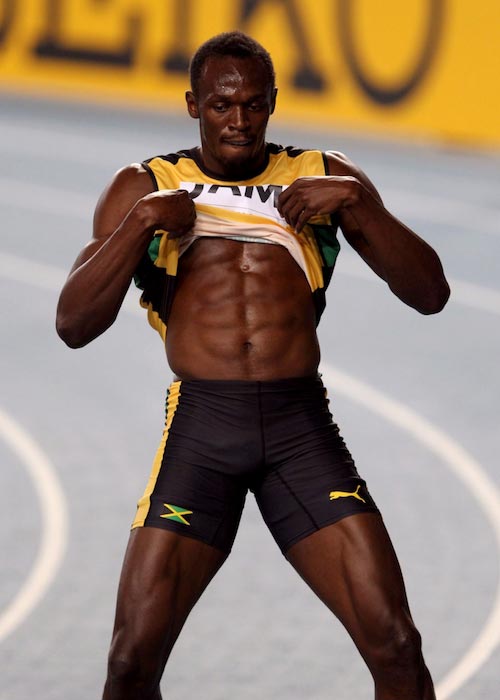
This Mr. Bolt.  He is the fastest human being alive.  Does he practice a ketogenic diet?!  No.  He derives most of his caloric intake from carbohydrates.  Shocking!

See a trend here Mr. Fat Diabetic Englishman?  The fittest people you will ever encounter eat a particular diet: high carbs, low fat.  They don't have diabetes.  They are not fat.  I think I've made my point here.

"Even if your not a diabetic, a ketogenic diet is healthy for you because it reduces inflammation which makes you healthier and butter makes your pants fall off."

Tell me another knee slapper!  First, ketogenic diet is not healthy.  Ketogenesis is a metabolic response, where your body starts burning fat and muscle instead of sugar for energy.  It is a biological response to starvation.  Essentially, by eating no (or very low) carbs you exhaust your body's glycogen (sugar) supplies and you go into Starvation Mode and your body begins to eat itself for fuel.  This... is not sustainable and not healthy.  This is what people on desert islands do in order to avoid dying.  This is what our ancestors did on the African Savannah 100,000 years ago when they weren't able to gather enough fruit to survive during a drought.  It is no something you should live with for the rest of your life.  It works for grossly overweight people because they do have a lot of fat stored that they can burn for fuel.  But it's a crash diet, you can't possible sustain that, and no lean person should even consider it.

Secondly, not a single professional athlete in any sport practices a ketogenic diet during competition.  All sport comes down to having more endurance or more strength than your opponent.  People who have no glycogen in their bodies are have no endurance, and no strength.  It's impossible to compete when your body is in a starvation mode against people who are well fed.

In running and cycling there is a word for competing when your body exhausts its carbohydrates and goes ketogenic: bonking.  A bonk happens mostly when you forget to eat or due to the intensity of the race, cannot take time to eat.  Your body exhausts its sugar fuel and switches to ketogensis.  It goes into LOW POWER MODE.  When you are bonking summoning even 1/4th of your strength is a titanic effort.  There are countless videos of the top runners and cyclists bonking and being left behind by their competitors like they were standing still.

Why would you recommend, on a cycling forum, a diet that is 100% incompatible with endurance sport?

"3. Ketogenic diet means you are a fat burner, not a carb burner. Fat burns slower and keeps you full."

Fucking nonsense.  You're right as I described above you burn fat instead of sugar in an incredibly inefficient process that leaves you weak and devoid of energy and strength.  "Fat burns slower."  Thanks for proving my point.

Fat does not "keep you full."  I hear this line time and again.  Carbs are empty and leave you hungry.  This is all based off a discredited study that created the bullshit "satiety index" which states that protein and fat is more "filling."  It's junk science but its been repeated enough to be considered true by the ignorant.  No, 2000 calories of beef is not more "satisfying" than 2000 calories of bananas.  If you eat 20 bananas you will be just as full if not fuller than 2000 calories of beef.  Satiety index is horseshit.

"4. Even if you don't go to a full ketosis diet, you can do yourself a world of favor staying away from processed foods."

This is a pretty big non-sequitor.  You can eat a ketogenic diet full of processed foods.  You can eat a ketogenic diet made up of lightly processed grassfed beef.  You can eat a vegan junk food diet or you can eat a whole food vegan diet of 95% fruits and vegetables.  Processing has nothing to do with ketogenic or non-ketogenic.  I will agree that the fewer processed foods the better, but that has nothing to do with ketogensis.  

He is advising people to "do themselves a favor" and go ketogenic, but he should do himself a favor and read Dr. Bernard's book and cure his diabetes.  He should stop giving diet advice on an endurance sports forum that will catastrophically impact the subject's ability to perform endurance sports.  He should get his cholesterol and blood pressure checked because while he might have his sugar under control, a diet high in animal fat and protein will simply be changing the cause of his death from diabetes related to heart failure.